"You're Spoiling That Baby!" — Why Responding to Cries Builds Better Brains
The Comment That Changed Everything
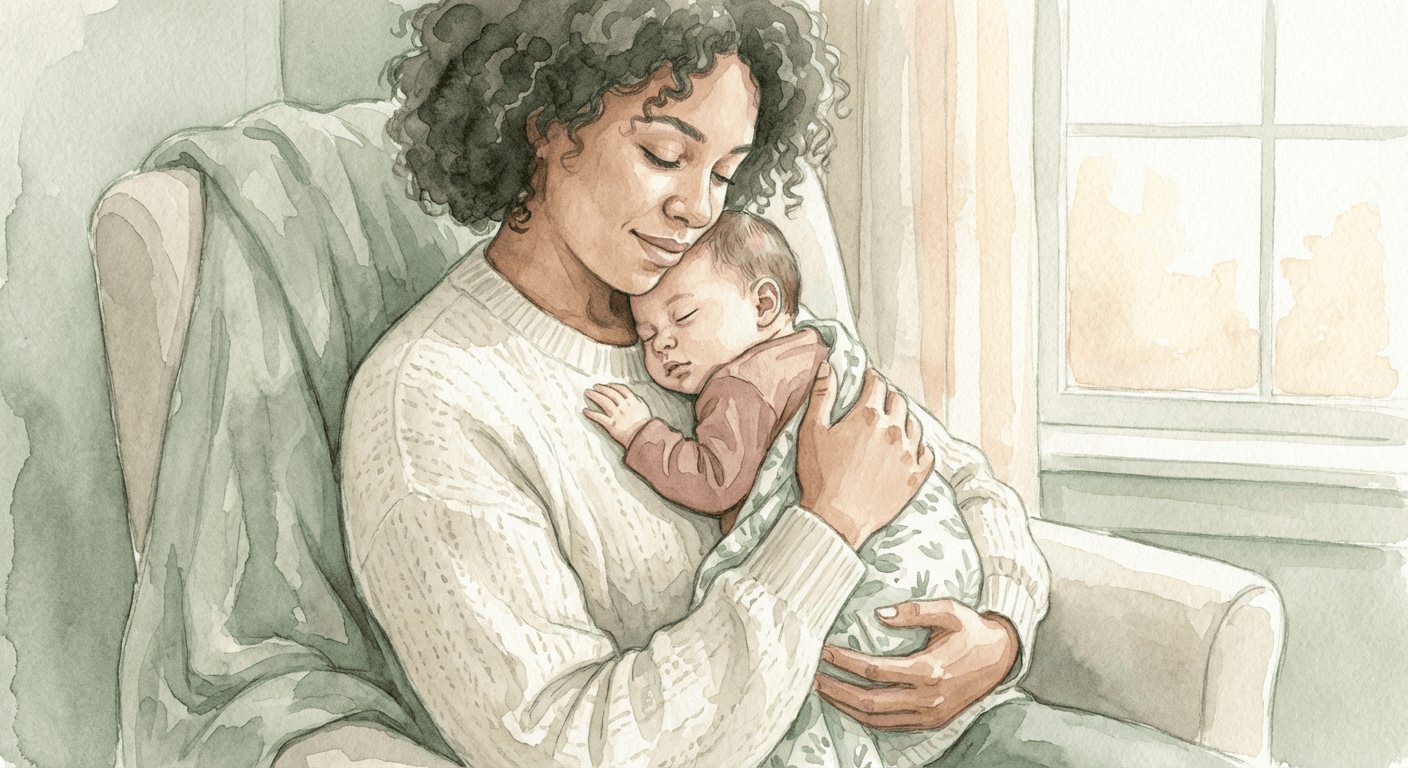
It happened at the grocery store. My baby was maybe eight weeks old, strapped to my chest in a carrier, and she started fussing. Not even full-on crying — just that little escalating whimper that says I'm done with this outing, please.
I immediately started bouncing, shushing, rubbing her back. And a woman behind me in line — a total stranger — leaned in and said, "You're going to spoil that baby if you pick her up every time she cries."
I smiled politely. But inside, I spiraled. Was I creating a clingy kid? Was I doing this wrong? Should I be tougher?
If you've ever had someone say this to you — a parent, a neighbor, a random person with an opinion — I want you to know something: the science is firmly, unambiguously on your side. Responding to your baby's cries doesn't create a spoiled child. It builds a better brain.
And the advice to "let them cry"? It comes from a place you'd never guess.
Where the "Spoiling" Myth Actually Came From
The idea that you can spoil a baby by responding to their cries didn't come from pediatricians. It didn't come from neuroscience. It came from a behaviorist psychologist in 1928 who thought parents shouldn't hug their kids.
John B. Watson was one of the most influential psychologists of the early 20th century. His book, The Psychological Care of Infant and Child, became a bestseller and shaped American parenting for decades. His core advice? Treat children like small adults. Don't coddle them. Don't kiss them goodnight — a handshake will do.
Seriously. He wrote: "Never hug and kiss them. Never let them sit in your lap. If you must, kiss them once on the forehead when they say goodnight."
Watson believed that responding to cries would reinforce crying, creating a needy, dependent child. He advocated for strict schedules and emotional distance — not because research supported it, but because his theory of behaviorism predicted it should work.
There was no scientific evidence behind this advice. None.
And yet, nearly a century later, echoes of Watson's philosophy still show up in grocery store lines and family group chats everywhere.
The good news? We now have decades of neuroscience, longitudinal studies, and developmental research that tell us exactly what happens in a baby's brain when we respond to their cries — and what happens when we don't.
What Happens in Your Baby's Brain When They Cry
Here's something that reframed everything for me: crying is not manipulation. It's communication.
Your newborn can't say "I'm hungry" or "I'm scared" or "this tag on my onesie is driving me crazy." Crying is their only reliable way to signal that something is wrong. It's not a power play. It's a survival mechanism — literally hardwired by evolution.
And here's what happens at the brain level when that cry goes unanswered.
The Cortisol Connection
When a baby cries and no one responds, their body floods with cortisol — the primary stress hormone. In small doses, cortisol is normal and even healthy. It's part of what the Harvard Center on the Developing Child calls a "positive stress response" — brief, manageable stress that helps the brain learn to cope.
But when a baby is left in distress repeatedly — when the crying goes on and no comfort comes — something different happens. The stress response doesn't turn off. Cortisol stays elevated. And the Harvard Center calls this "toxic stress": strong, frequent, or prolonged adversity without the buffering presence of a supportive caregiver.
Toxic stress doesn't just feel bad. It physically disrupts developing brain architecture. It can impair the formation of neural connections in areas responsible for learning, memory, emotional regulation, and decision-making. The effects can last years.
When I first read about toxic stress, I actually teared up. Not because I felt guilty — but because it made the science so clear. Your presence isn't a luxury. It's a biological necessity.
The Still Face Experiment
If you haven't seen Dr. Edward Tronick's Still Face Experiment, look it up — it's one of the most powerful demonstrations in all of developmental psychology.
In the experiment, a mother plays with her baby normally — smiling, talking, responding. Then she's asked to go completely still and expressionless. No response to the baby's coos, cries, or gestures. Just a blank face.
What happens is immediate and heartbreaking. The baby tries everything to get their mom's attention — reaching, babbling, smiling. When nothing works, the baby becomes visibly distressed, turns away, and can even lose postural control from the stress.
In just two minutes of unresponsiveness, the baby's entire emotional state collapses.
But here's the hopeful part: the moment the mother re-engages — smiles, talks, picks the baby up — the baby recovers quickly. The connection repairs.
This experiment, replicated countless times since the 1970s, shows two critical things: babies are exquisitely tuned to our responsiveness, and repair is always possible.
Secure Attachment: The Science of Not Spoiling
So if responding to cries doesn't spoil a baby, what does it do? It builds something researchers call secure attachment — and it's one of the most powerful predictors of lifelong wellbeing we've ever identified.
Secure attachment forms when a baby learns, through hundreds of small interactions, that their caregiver is reliable. I cry, someone comes. I'm scared, someone holds me. I reach out, someone reaches back.
This doesn't require perfection. You don't need to respond instantly every single time. What matters is the pattern — that more often than not, when your baby needs you, you're there.
What the Research Shows
The evidence on secure attachment is extensive and remarkably consistent:
- A 2014 study published by Princeton, Columbia, and the University of Bristol (the "Baby Bonds" report) analyzed data from over 14,000 children. They found that about 60% of infants develop secure attachments with their caregivers — and those children showed better emotional regulation, social skills, and resilience throughout childhood. The 40% who didn't form secure bonds were more likely to exhibit aggression, defiance, and hyperactivity.
- The Minnesota Longitudinal Study of Risk and Adaptation — one of the longest-running studies in developmental psychology at 35 years — found that the quality of early attachment predicted outcomes well into adulthood, including relationship quality, emotional resilience, and even career success. The effects held even after controlling for temperament and social class.
- Children with secure attachment are more independent, not less. This is the great paradox that flips the "spoiling" myth on its head: babies who are consistently comforted become toddlers who explore more confidently, preschoolers with better social skills, and adults with healthier relationships.
As the researchers put it: security breeds independence. Neglect breeds dependency.
Your Baby Can't Self-Soothe (And That's Normal)
One of the most persistent pieces of advice new parents hear is that babies "need to learn to self-soothe." The idea is that if you always comfort them, they'll never develop the ability to calm themselves down.
But here's what the neuroscience actually says: infants lack the neurological maturity to self-soothe. It's not a skill they're refusing to use — the brain systems required for emotional self-regulation simply aren't developed yet.
Zero to Three — one of the leading authorities on early childhood development — explains that babies depend on co-regulation to manage their emotions. That means they need you to be their calm. Your steady heartbeat against their chest, your low humming voice, your rhythmic rocking — these aren't crutches. They're teaching tools.
Every time you soothe your crying baby, you're showing their brain what "calm" feels like. Over time, through hundreds of these co-regulation experiences, their brain gradually builds the pathways to do it independently.
You're not preventing self-soothing by responding. You're building the foundation for it.
What the Experts Actually Recommend
Let's look at what the major authorities say — not the opinions in your family group chat, but the organizations that study this for a living.
The American Academy of Pediatrics (AAP): You cannot spoil a baby under 4 months by responding to their cries. Responding promptly makes them feel safe and loved. Babies normally cry 1–4 hours per day, peaking around 2–6 weeks.
Zero to Three: Babies communicate through crying. Responsive care — holding, rocking, feeding, singing — helps them regulate emotions they can't manage alone.
Harvard Center on the Developing Child: Serve-and-return interactions (including responding to cries) are the foundational building blocks of healthy brain architecture. The absence of responsive caregiving can lead to toxic stress, which physically disrupts brain development.
The consensus is overwhelming. Responding to your baby is not a parenting style. It's a biological imperative.
But What About When You're Overwhelmed?
Let me be real: knowing the science doesn't make the crying easier.
There will be nights when you've done everything — fed, changed, rocked, bounced, sang every song you know — and your baby is still crying. And you will feel like you're losing your mind.
In those moments, it's okay to put your baby down in a safe place and take a break. A crib with nothing in it. A flat, safe surface. Walk to the next room. Take ten deep breaths. Cry if you need to.
The AAP specifically recommends this. A few minutes of crying in a safe space while you collect yourself is completely different from a pattern of ignoring your baby's needs. Taking a break to stay regulated yourself is actually part of responsive parenting — because your calm is their calm.
What you should never do: shake your baby. This is the one thing I want every exhausted parent to hear. If the crying feels unbearable, put the baby down and walk away. Call someone. It's always the right choice.
6 Ways to Respond to Your Baby's Cries (That Build Their Brain)
Here's the practical part. These aren't complicated — but they're powerful.
1. Respond Promptly (Not Perfectly)
You don't need to leap across the room in 0.5 seconds. But when your baby cries, acknowledge it. Even your voice from across the room — "I hear you, I'm coming" — begins the process of co-regulation before you even pick them up.
2. Try the Comfort Checklist
Hungry? Wet diaper? Too hot or cold? Overtired? Gassy? Work through the basics first. Sometimes the answer is obvious once you slow down.
3. Use Your Body
Skin-to-skin contact. Gentle rocking. Swaying while walking. Holding them against your chest so they can hear your heartbeat. Physical closeness is one of the most powerful stress-reducers for an infant — it literally lowers their cortisol levels.
4. Use Your Voice
Sing. Hum. Talk in a low, steady voice. Even that "silly" baby voice (what researchers call infant-directed speech) is actually scientifically effective — the higher pitch and exaggerated patterns capture your baby's attention and help regulate their emotional state.
5. Reduce the Stimulation
Sometimes babies cry because they're overwhelmed. Dim the lights, reduce noise, move to a quieter space. Not every cry means "do more" — sometimes it means "do less."
6. Practice the Pause-and-Observe
Before jumping in with a solution, take a moment to watch. What is your baby telling you? Are they rooting (hungry)? Arching their back (uncomfortable)? Rubbing their eyes (tired)? The more you observe, the better you get at reading their specific signals — and that attunement is serve-and-return in action.
Key Takeaways
- The "spoiling" myth originated with behaviorist John B. Watson in 1928 — his advice had no scientific evidence behind it
- When babies cry without comfort, elevated cortisol (stress hormone) can reach toxic levels that physically disrupt developing brain architecture
- Babies lack the neurological maturity to self-soothe — they depend on co-regulation from caregivers to learn what "calm" feels like
- Securely attached babies (built through responsive care) grow into more independent, resilient, and socially skilled children — not more dependent ones
- The AAP, Harvard Center on the Developing Child, and Zero to Three all agree: you cannot spoil a baby by responding to their cries
- If you're overwhelmed, putting your baby in a safe place and taking a break is a healthy part of responsive parenting
The Next Time Someone Says You're Spoiling Your Baby
You'll hear it again. At a family dinner, in a parenting forum, from someone who means well but is working from a playbook that's almost a hundred years old.
And when you do, you can smile — maybe even politely — knowing that every major research institution studying child development has reached the same conclusion: responding to your baby's cries is one of the most important things you can do for their developing brain.
You're not creating dependency. You're building neural architecture. You're not reinforcing bad behavior. You're teaching your baby that the world is safe, that communication works, that they matter.
Every time you pick up your crying baby — at 2am, in the grocery store, in the middle of cooking dinner — you are doing exactly what their brain needs.
That's not spoiling. That's science. And you're doing an incredible job.
Stay in the loop
Weekly tips backed by science, delivered with love.
You might also like
Your Baby Doesn't Need Expensive Toys to Develop Well — Here's What They Need Instead
The baby toy industry is worth billions — but research shows the best brain-building tools are free. Here's what science…
Boys' Brains vs. Girls' Brains: What Neuroscience Actually Tells Us
Are boys really "wired" for trucks and girls for dolls? The science of sex differences in baby brains is way more nuance…