What Is Neuroplasticity and Why Does It Matter Most Before Age 3?
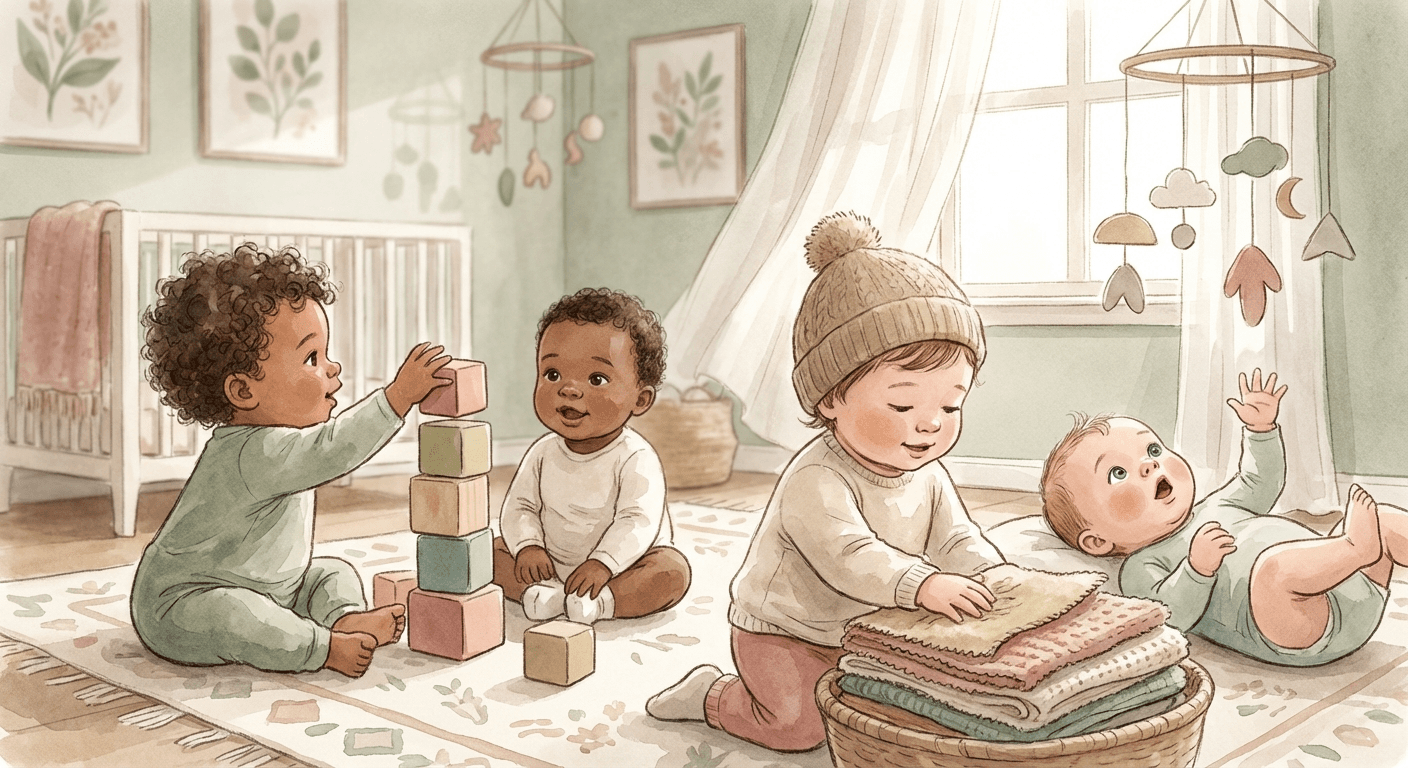
Your Baby's Brain Has a Superpower
When my daughter was about fourteen months old, she fell off the couch. Nothing serious — just a tumble onto a soft rug — but she cried like the world was ending. Five minutes later she was back on the couch, carefully lowering herself feet-first instead of headfirst. She had literally rewired her approach in minutes.
That's neuroplasticity in action. And it's happening in your child's brain right now, on a scale that's almost impossible to comprehend.
Neuroplasticity is one of those terms that sounds intimidating but describes something beautifully simple: your brain's ability to change itself based on experience. And in the first three years of life, this ability is cranked up to a level it will never reach again.
Neuroplasticity, Explained Simply
Imagine your baby's brain as a city under construction. At birth, the basic roads exist — your baby can breathe, cry, suckle, sleep. But the highways, the side streets, the shortcuts? Those are all being built in real time, based on what your baby experiences.
Neuroplasticity is the construction crew. It's the brain's ability to form new connections between neurons (brain cells), strengthen the connections that get used often, and prune away the ones that don't.
Every time your baby hears your voice, touches something new, watches you smile — the construction crew gets to work. Connections form. Pathways strengthen. The brain physically changes shape.
This isn't a metaphor. Brain imaging studies show that experience literally changes the structure of the developing brain. The connections that form in response to your baby's world become the wiring that supports everything from language to emotional regulation to problem-solving.
Why the First Three Years Are the Golden Window
Here's what makes early childhood so extraordinary: your baby's brain is more adaptable right now than it will ever be again.
The numbers tell the story:
- At birth, your baby's brain is about 25% of its adult size
- By age three, it's reached roughly 80% of its adult size
- A two-year-old's brain has about 50% more synaptic connections than an adult brain
- The brain uses around 60% of your baby's total energy — that's how hard it's working
The Harvard Center on the Developing Child calls this period the foundation of brain architecture. The brain is being built from the bottom up, starting with basic sensory circuits (seeing, hearing, touching) and building toward more complex circuits for language, reasoning, and emotional control.
Think of it this way: it's easier to build the house right the first time than to renovate later. That doesn't mean renovation is impossible — adults still have neuroplasticity — but it takes more effort, more time, and more resources. The first three years are when the brain is most willing to be shaped.
Sensitive Periods: Windows Within the Window
Within these first three years, neuroscientists have identified what they call sensitive periods — specific windows when the brain is especially hungry for particular types of input.
- Vision and hearing (0–12 months): The brain is rapidly wiring up the circuits that process what your baby sees and hears. This is why newborns stare so intently at faces and startle at sounds.
- Language (6–36 months): The brain is building the neural networks for understanding and producing language. Babies at six months can distinguish sounds from every language on earth; by twelve months, they've already started specialising in the language(s) they hear most.
- Emotional regulation (0–24 months): The brain is setting up the circuits that help your child manage big feelings — and it does this primarily through your responsive caregiving.
These aren't hard deadlines. Neuroscientists distinguish between critical periods (strict, with limited ability to catch up later) and sensitive periods (optimal windows, but with continued opportunity for development). Most of what happens in early childhood falls into the sensitive period category. So if you're reading this and your child is already three, or four, or ten — take a breath. It's never too late. The brain remains changeable throughout life.
But the first three years? That's when the door is widest open.
The Beautiful Flip Side: Why "Use It or Lose It" Is Actually Good News
Your baby's brain produces far more connections than it will ultimately need. By age two or three, it has roughly 1,000 trillion synapses — a staggering number that actually exceeds what an adult brain has.
Then something remarkable happens: pruning.
The brain starts eliminating connections that aren't being used regularly and strengthening the ones that are. This isn't a flaw in the system — it's the whole point. Pruning makes the brain more efficient, more specialised, more yours.
I used to find this idea unsettling. My baby is losing brain connections? But once I understood it, I found it reassuring. It means the brain isn't just randomly wiring itself — it's listening to your child's actual life and optimising accordingly.
The connections your child uses every day — hearing language, feeling loved, exploring their world — those are the ones that stick around and get stronger. The brain is essentially saying: Tell me what matters in your world, and I'll build for that.
What This Means for You as a Parent (Hint: You're Already Doing It)
Here's where I need to be honest with you: the concept of neuroplasticity has been weaponised by the baby enrichment industry. The message has become "your baby's brain is incredibly plastic right now, so you'd better buy these flashcards / download this app / enrol in this program or you're wasting the window."
That is not what the science says.
What the research actually shows is that the most powerful brain-shaping experiences are ordinary, everyday interactions between you and your child. Not programs. Not products. You.
Five evidence-based ways to support your baby's neuroplasticity:
1. Have conversations — even before they can talk back
When you narrate your day ("Look, we're putting on your socks — one foot, two feet!"), you're not just filling silence. You're lighting up language circuits, building vocabulary networks, and teaching the rhythm of human communication. Research consistently shows that the quantity and quality of language a child hears in the first three years predicts language skills years later.
2. Play the "serve and return" game
When your baby coos and you coo back. When your toddler points at a dog and you say, "Yes! A big brown dog!" These back-and-forth exchanges — what the Harvard Center on the Developing Child calls serve and return — are the single most important thing you can do for brain development. Each volley strengthens neural connections and teaches your child that their actions matter, that communication works, that they are heard.
3. Let them play — really play
Unstructured, messy, exploratory play isn't wasting time. It's the primary mechanism through which young children learn about the world. When your toddler dumps out a bin of blocks for the fourteenth time today, they're experimenting with gravity, cause and effect, spatial reasoning. Play is how the brain builds itself.
Full disclosure: I've spent many days watching my daughter systematically empty every drawer in the kitchen and thought, there has to be a more efficient way to learn. But the science says this IS the efficient way.
4. Provide a safe emotional base
Neuroplasticity works both ways. Just as positive experiences strengthen beneficial connections, chronic stress can wire the brain for anxiety and hypervigilance. Your consistent, responsive presence — picking them up when they cry, comforting them when they're scared, being the calm in their storm — builds the neural architecture for emotional regulation and resilience.
This doesn't mean you need to be perfect. Normal parenting stress — a bad day, losing your patience, putting them down to take a breather — does not damage your child's brain. What matters is the overall pattern: more warmth than coldness, more responsiveness than absence.
5. Offer sensory variety (for free)
Your baby's brain is hungry for input from all five senses. And the best sources are free: - Feel the grass under bare feet - Listen to rain on the window - Smell dinner cooking - Watch leaves blowing in the wind - Touch different textures — smooth stones, rough bark, squishy playdough
You don't need a sensory subscription box (though they're fun). The world itself is a sensory buffet.
Three Myths About Neuroplasticity That Need to Go
Myth: "If you miss the window before age 3, it's too late."
This one causes so much unnecessary panic. Yes, the first three years are a period of extraordinary brain plasticity. But neuroplasticity doesn't vanish on your child's third birthday. The brain continues to change and adapt throughout childhood, adolescence, and even adulthood. Early intervention for developmental delays is most effective when it starts early — but "most effective" doesn't mean "only effective." It is never too late to make a positive difference.
Myth: "Babies need constant stimulation to develop properly."
More is not always better. Babies also need downtime — quiet moments, unstructured time, even boredom. Overstimulation can actually be counterproductive. Your baby will tell you when they've had enough: turning away, fussing, closing their eyes. Trust those signals. Rest is brain-building time too — it's when the brain consolidates what it's learned.
Myth: "You need special products to maximise brain development."
No flashcard, educational video, or brain-training app has been shown to outperform simple human interaction when it comes to early brain development. The American Academy of Pediatrics recommends avoiding screen media for children under 18–24 months (except video chatting) for a reason. Your voice, your face, your touch — these are the most sophisticated brain-building tools that exist.
A Note on Equity
One thing that strikes me about neuroplasticity research is how democratic it is. The experiences that build the best brains aren't expensive. Talking, singing, playing, responding, loving — these cost nothing.
But the barriers to providing them can be enormous. A parent working three jobs has less time for floor play. A family in crisis has less bandwidth for serve-and-return. Toxic stress from poverty, racism, or unsafe housing doesn't just affect parents — it affects developing brains directly.
So when we talk about supporting neuroplasticity, we can't just talk about individual parenting tips. We need to talk about supporting parents — with parental leave, affordable childcare, mental health resources, and communities that actually help.
Every baby's brain is ready to learn. The question is whether every baby gets the environment they deserve.
Key Takeaways
- **Neuroplasticity** is your brain's ability to rewire itself based on experience — and it peaks in the first three years of life
- By age 3, your child's brain is 80% of adult size and has more synaptic connections than it will ever have again
- **Sensitive periods** within these years make the brain especially receptive to language, sensory input, and emotional bonding
- The most powerful brain-building activities are free: talking, playing, responding, and providing a loving, stable environment
- **It's never too late** — neuroplasticity continues throughout life, even if it's strongest in early childhood
- You don't need special products or programs — everyday interactions are exactly what your baby's brain needs
You're Building a Brain, One Moment at a Time
I think the most empowering thing about understanding neuroplasticity is this: all those small moments you barely notice? They're the big ones.
The silly song you sang in the car. The way you named every vegetable at the grocery store. The time you just sat on the floor and let your toddler bring you random objects for twenty minutes. Those weren't nothing moments. Those were brain-building moments.
Your child's brain is extraordinarily good at growing. And you — imperfect, tired, doing-your-best you — are exactly the person it needs to grow with.
Keep talking. Keep playing. Keep showing up. The science says you're doing more than enough.
Stay in the loop
Weekly tips backed by science, delivered with love.
You might also like
Your Baby Doesn't Need Expensive Toys to Develop Well — Here's What They Need Instead
The baby toy industry is worth billions — but research shows the best brain-building tools are free. Here's what science…
Boys' Brains vs. Girls' Brains: What Neuroscience Actually Tells Us
Are boys really "wired" for trucks and girls for dolls? The science of sex differences in baby brains is way more nuance…