The Neuroscience of Attachment: How Bonding Literally Builds Your Baby's Brain
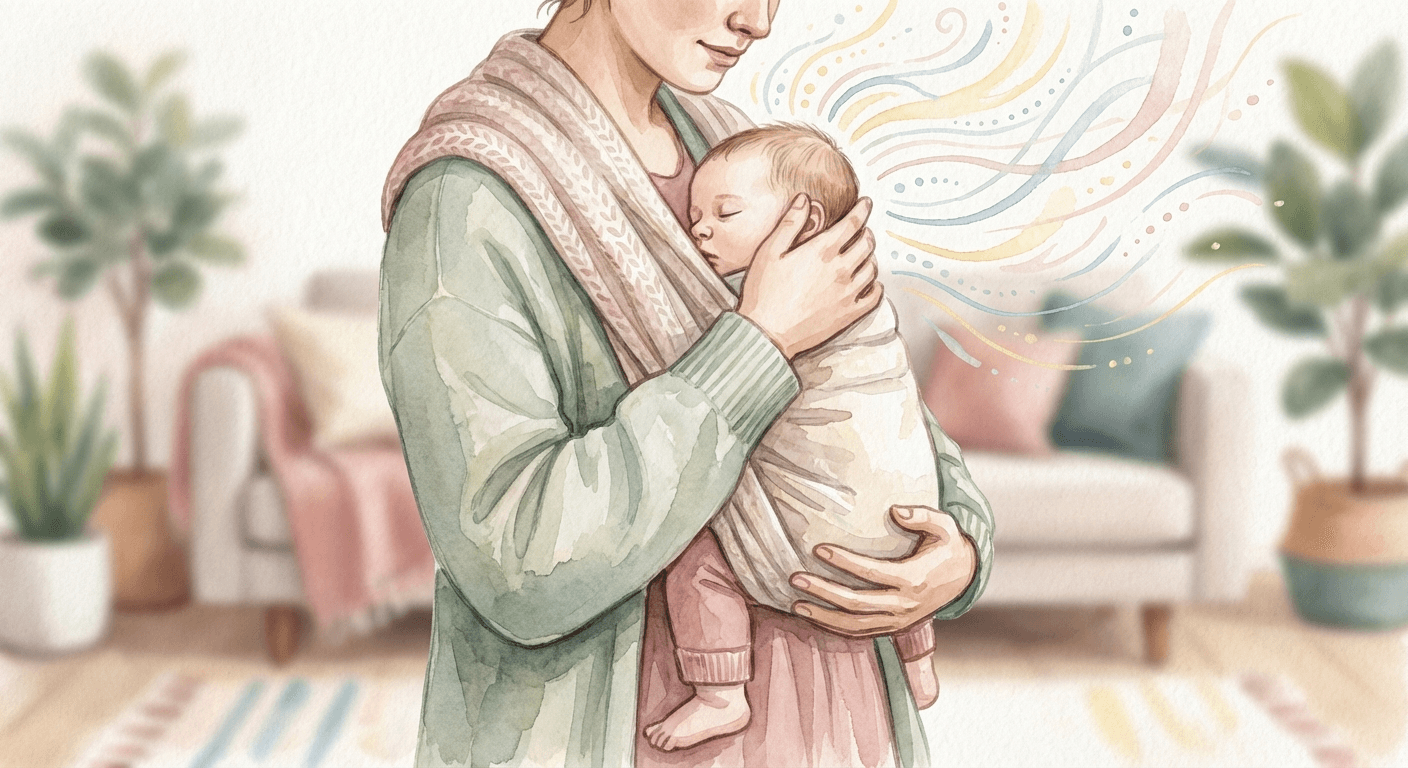
The Moment Everything Changed for Me
I remember sitting in the rocking chair at 3am, my baby finally asleep on my chest after an hour of crying. I was exhausted, questioning everything, and wondering if I was doing any of this right.
Then I read something that stopped me cold: every time I picked her up when she cried, every time I whispered "I'm here" in the dark, I wasn't just comforting her. I was physically building her brain.
Not metaphorically. Not in some vague, feel-good way. I mean literal neural pathways were forming, stress-response systems were being calibrated, and brain architecture was being constructed — all because I showed up.
That changed how I thought about every single midnight feed, every tearful cuddle, every exhausting day. And I want it to change things for you too.
What Attachment Actually Is (And Isn't)
When scientists talk about "attachment," they're not talking about being clingy or helicopter parenting. Attachment is the deep emotional bond that forms between a baby and their primary caregivers — and it's one of the most powerful forces in human development.
John Bowlby, the psychologist who pioneered attachment theory in the 1950s, proposed that babies are biologically programmed to form these bonds. It's a survival mechanism — babies who stay close to responsive caregivers are more likely to be fed, protected, and kept alive.
But here's what modern neuroscience has added to Bowlby's work: attachment doesn't just keep babies alive. It shapes the very structure and function of their developing brains.
Your baby's brain is forming more than one million new neural connections every second during the first few years of life. And the quality of your relationship — your responsiveness, your warmth, your presence — directly influences which connections get strengthened and which get pruned away.
How Bonding Physically Changes the Brain
Let's get specific about what's happening inside your baby's head when you bond with them.
The Three Brain Regions That Care Most
Research has identified three key brain structures that are profoundly shaped by the quality of early caregiving:
The amygdala — your baby's emotional alarm system. It processes fear, threat, and emotional memories. Sensitive, responsive caregiving helps calibrate this system so it responds appropriately to real threats without going haywire at every little thing.
The prefrontal cortex — the brain's CEO. This region handles decision-making, impulse control, and emotional regulation. It develops slowly over childhood, and its foundation is laid through those thousands of daily interactions with you.
The hippocampus — the memory and learning center. Secure attachment supports healthy hippocampal development, which means better learning, memory formation, and the ability to manage stress.
A fascinating study found that mothers with greater secure attachment knowledge had children with smaller left amygdala volumes — suggesting that secure bonding literally fine-tunes the brain's threat-detection system, making it more efficient rather than chronically overactive.
The Cortisol Connection
Here's something that blew my mind: your cuddles actually regulate your baby's stress hormones.
Cortisol is the body's primary stress hormone. In small doses, it's helpful — it keeps us alert and responsive. But when cortisol stays elevated for long periods (what researchers call "toxic stress"), it can damage developing neural connections.
Studies using the "Strange Situation" procedure — where babies are briefly separated from their caregivers — have consistently found that securely attached infants show little or no spike in cortisol during the separation. Their stress systems stay regulated because they've learned, through months of responsive care, that help is coming.
Insecurely attached infants? Their cortisol levels tell a different story — often spiking higher and taking longer to come back down.
This isn't about one stressful moment. It's about the cumulative effect of thousands of moments where your baby learns: "When I'm upset, someone comes. I am safe."
The Oxytocin Loop
While cortisol is the stress side of the equation, oxytocin is the bonding side — and it creates a beautiful feedback loop between you and your baby.
When you hold your baby, make eye contact, or speak to them in that warm, sing-song voice, both of your brains release oxytocin. This "love hormone" promotes feelings of trust, reduces stress, and — here's the key part — strengthens the neural pathways associated with social bonding.
A 2024 study from University College London found something remarkable: infants whose mothers regularly used language to describe their child's thoughts and feelings had higher oxytocin levels. Simply narrating your baby's inner world — "Oh, you look frustrated!" or "You're so excited to see the dog!" — physically boosted their bonding chemistry.
Research has also shown that oxytocin reduces amygdala activation, meaning it literally dials down the brain's fear response. So when you comfort your crying baby, you're not just making them feel better emotionally — you're chemically calming their brain's alarm system.
The Bucharest Study: What Happens Without Attachment
Sometimes the most powerful evidence for something's importance comes from seeing what happens without it.
The Bucharest Early Intervention Project is one of the most significant — and heartbreaking — studies in child development. Beginning in 2000, researchers from Harvard, Tulane, and other institutions studied children raised in Romanian orphanages, where they received basic physical care but very little individual attention, warmth, or responsive caregiving.
The findings were stark:
- Children raised without consistent attachment figures had reduced gray matter volume (the brain tissue crucial for information processing and cognition)
- They showed decreased white matter integrity (the "wiring" that connects different brain regions)
- They had significantly lower IQ scores and higher rates of emotional and behavioral difficulties
But here's the hopeful part — and this is crucial: children who were placed in high-quality foster care before age two showed remarkable recovery. Their brain activity began normalizing. Their cognitive scores improved significantly. By age 16, those placed early showed typical development in brain areas related to emotional regulation, language, and problem-solving.
The takeaway isn't meant to scare you. It's meant to empower you: responsive, loving relationships literally rescue brain development. And for the vast majority of parents reading this, you're already providing exactly what your baby needs.
The "Spoiling" Myth, Demolished by Science
Let's address the elephant in the room, because I know someone — maybe your mother-in-law, maybe a random person at the grocery store — has said it to you:
"You're going to spoil that baby if you keep picking them up every time they cry."
I heard it too. And every time, I felt that prickle of doubt. Was I creating a clingy, dependent child?
The science is unequivocal: you cannot spoil a baby by responding to their needs.
Babies don't have the cognitive capacity for manipulation. When they cry, they're communicating a genuine need — hunger, discomfort, fear, or a need for connection. Responding consistently doesn't create dependency; it creates security.
And here's the beautiful irony: securely attached children actually become MORE independent, not less. Research consistently shows they explore more confidently, take healthy risks, and develop better social skills — precisely because they know they have a safe base to return to.
Think of it like a rock-climbing harness. The climber who knows their safety rope is solid will climb higher and more boldly than the one who isn't sure if it'll hold. Your responsiveness is your child's safety rope.
Building Secure Attachment: What It Actually Looks Like
Secure attachment isn't about being a perfect parent. (Thank goodness, because that job posting doesn't exist.) It's about being a "good enough" parent — a term coined by pediatrician Donald Winnicott that researchers still use today.
Here's what the evidence says matters most:
1. Respond to Their Cues (Most of the Time)
You don't need to catch every single signal. Research suggests that even getting it right about 50% of the time is enough to build secure attachment. What matters is the overall pattern — not perfection.
When your baby coos, coo back. When they cry, come. When they point at something, look and name it. These serve-and-return interactions are the building blocks of brain architecture.
2. Be the Calm in Their Storm
When your baby is distressed, your calm presence teaches their brain how to regulate emotions. You're literally lending them your mature stress-response system until theirs develops.
This doesn't mean you need to feel calm inside. (At 3am with a screaming baby, who does?) It means showing up, holding them, and riding it out together.
3. Narrate Their World
Remember that UCL oxytocin study? Talk to your baby about what they're experiencing. "You're feeling frustrated because that block won't stack." "You're so happy to see Daddy!" This builds emotional vocabulary, boosts oxytocin, and helps them make sense of their inner world.
4. Prioritize Physical Closeness
Skin-to-skin contact, cuddles, gentle touch, baby-wearing — all of these trigger oxytocin release in both parent and baby, strengthening the bond and calming stress responses.
5. Create Predictable Rhythms
Babies thrive on routine. Not rigid schedules, but predictable patterns — wake up, eat, play, nap. Predictability signals safety to the developing brain.
6. Repair When You Rupture
You will lose your patience. You will miss cues. You will have days where you're running on empty and can barely function. That's not just normal — it's expected.
What matters is the repair. Coming back, reconnecting, comforting. Research shows that the repair process actually strengthens attachment because it teaches babies that relationships can weather storms.
Attachment Isn't Just for Moms
I want to be clear about something: secure attachment can form with any consistent, responsive caregiver. Dads, grandparents, adoptive parents, foster parents — the brain doesn't check your biological relationship. It responds to responsiveness.
Research from the Bucharest study showed that children placed with loving foster families developed secure attachments and showed brain recovery — proving that biology isn't destiny. What builds brains is consistent, responsive love.
A 2023 systematic review also found that both mothers and fathers show increased oxytocin levels during bonding interactions, though the style may differ — oxytocin tends to strengthen affectionate parenting in mothers and more stimulatory, playful parenting in fathers. Both are valuable. Both build brains.
What This Means for Your Everyday Life
Here's what I find most reassuring about all of this science: you're probably already doing it.
Every diaper change where you chat with your baby. Every bedtime story. Every time you comfort a crying toddler instead of telling them to "toughen up." Every silly face, every song in the bath, every "I see you" moment.
You're not just going through the motions of parenthood. You're literally constructing a brain. You're calibrating a stress-response system. You're writing the neural code that will influence how your child handles relationships, emotions, and challenges for the rest of their life.
And you're doing it in the most ordinary moments — the ones that feel so small they couldn't possibly matter.
They matter. Neuroscience says so.
Key Takeaways
- Attachment isn't just emotional — it physically shapes brain structures including the amygdala, prefrontal cortex, and hippocampus
- Responsive caregiving keeps your baby's cortisol (stress hormone) in balance, protecting developing neural connections from toxic stress
- Oxytocin released during bonding strengthens neural pathways and calms your baby's fear response — even narrating their feelings boosts this effect
- You cannot spoil a baby by responding to their cries — securely attached children actually become more independent, not less
- You don't need to be perfect; responding to your baby's cues about 50% of the time is enough to build secure attachment
- Any consistent, responsive caregiver can build secure attachment — it's about responsiveness, not biology
One Last Thing
If you're reading this at 2am, exhausted, wondering if any of this matters — it does. More than you know.
That tiny human on your chest isn't just being comforted. Their brain is being built. And you're the architect.
Keep showing up. That's the whole job.
Stay in the loop
Weekly tips backed by science, delivered with love.
You might also like
Your Baby Doesn't Need Expensive Toys to Develop Well — Here's What They Need Instead
The baby toy industry is worth billions — but research shows the best brain-building tools are free. Here's what science…
Boys' Brains vs. Girls' Brains: What Neuroscience Actually Tells Us
Are boys really "wired" for trucks and girls for dolls? The science of sex differences in baby brains is way more nuance…