The Science of Serve and Return: The Most Important Parenting Skill You've Never Heard Of
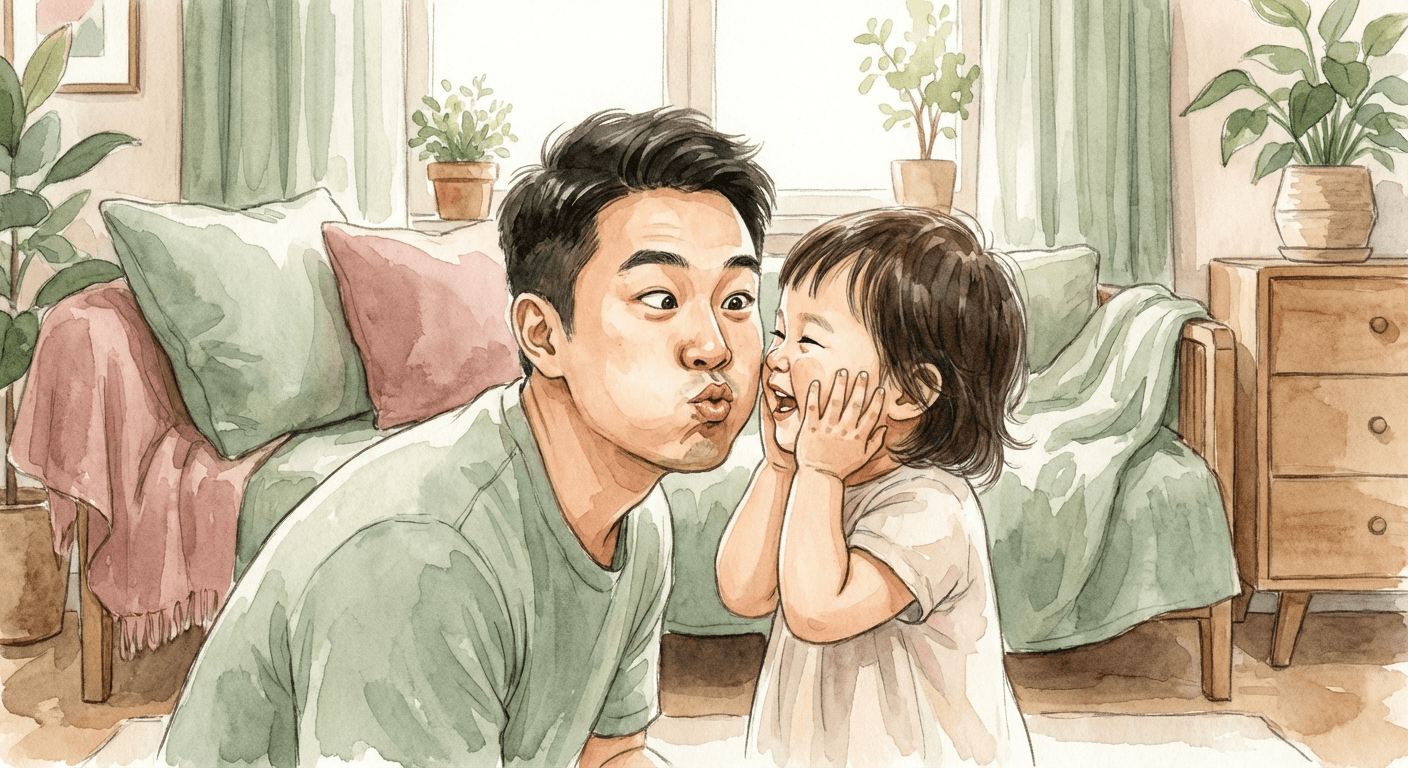
What Is Serve and Return?
Before I became a parent, I'd never heard the term "serve and return." Now it's something I think about every single day — and honestly, learning about it completely changed how I interact with my daughter.
Imagine a tennis match, but instead of a ball, you're volleying smiles, sounds, and gestures back and forth with your baby.
Your baby serves — they coo, point at something, make a face, or cry. You return — you respond with a smile, words, a hug, or by following their gaze. This simple back-and-forth exchange is what child development researchers at Harvard's Center on the Developing Child call "serve and return" interaction.
And according to decades of research, it may be the single most important thing you can do for your child's brain development.
Why It Matters So Much
Every time you respond to your baby's cues, you're doing three critical things:
1. Building Brain Architecture Each serve-and-return exchange activates and strengthens neural pathways. Think of it like laying fiber-optic cables in your baby's brain. The more back-and-forth interactions, the stronger and more efficient these pathways become.
2. Teaching Emotional Regulation When you respond to your baby's distress with comfort, you're teaching their brain how to manage stress. Over time, this builds what scientists call a **well-regulated stress response system** — essentially, your baby learns that when things get tough, help is available, and they can cope.
3. Building the Foundation for All Future Learning Serve and return interactions build the foundational skills that everything else depends on: attention, communication, social skills, and the ability to form relationships. Without this foundation, even the best preschool or tutoring program will struggle to be effective.
Key Takeaways
- "Serve and return" is the back-and-forth interaction between you and your baby — they cue, you respond
- It's the #1 most important activity for healthy brain development, according to Harvard's Center on the Developing Child
- These interactions build neural pathways, teach emotional regulation, and lay the foundation for all future learning
- It doesn't require any special skills or equipment — just attention and responsiveness
- Missed serves happen to every parent; what matters is your overall pattern of responsiveness
The Five Steps of Serve and Return
Harvard's Center on the Developing Child breaks it down into five simple steps:
Step 1: Notice the Serve Pay attention to what your baby is looking at, pointing to, or trying to tell you. A serve could be: - A coo or babble - A gesture or point - A facial expression - A cry - Eye contact - Reaching for something
Step 2: Return the Serve Respond to your baby in a warm, supportive way. This could be: - Making eye contact and smiling - Repeating the sound they made - Saying "Oh, you see the dog! Yes, that's a big dog!" - Picking them up when they reach for you - Comforting them when they cry
Step 3: Give It a Name Help your baby understand the world by naming what they're experiencing: "You're pointing at the bird! That bird is singing a song." This builds language and helps them make sense of their environment.
Step 4: Take Turns Keep the interaction going back and forth. Wait for your baby to respond before taking another turn. This teaches the fundamental rhythm of human communication.
Step 5: Practice Endings and Beginnings Pay attention to when your baby is done — they might look away, get fussy, or lose interest. That's okay. Let the interaction end naturally, and be ready for the next one.
What Happens When Serves Go Unreturned?
Research has shown that when babies' serves consistently go unreturned — when they coo and nobody responds, when they cry and nobody comes — it can have measurable effects on brain development.
A landmark study using "still face" experiments (where a parent suddenly becomes unresponsive) shows that babies become visibly distressed within seconds when their serves aren't returned. They try harder and harder to get a response, and when they can't, they withdraw.
Over time, consistently unreturned serves can lead to: - Weaker neural connections - Difficulty with emotional regulation - Challenges with attention and learning - Increased stress hormones
But here's the crucial nuance: every parent misses serves sometimes. You're tired, you're distracted, you're human. I can't tell you how many times I've been lost in my phone while my daughter was trying to show me something. The guilt is real — but the science says it's okay. What matters is the overall pattern. A generally responsive parent who sometimes misses a cue is doing just fine. It's chronic, persistent unresponsiveness that causes concern.
Serve and Return at Every Age
Newborn (0-3 months) - **Their serves:** Crying, cooing, making eye contact, turning toward your voice - **Your returns:** Holding them close, talking softly, mimicking their sounds, gentle rocking
3-6 months - **Their serves:** Babbling, smiling, reaching, laughing - **Your returns:** Babbling back, playing peek-a-boo, offering toys they're reaching for
6-12 months - **Their serves:** Pointing, waving, saying simple sounds like "ma" or "da" - **Your returns:** Following their point ("You see the cat!"), waving back, repeating and expanding their sounds
1-2 years - **Their serves:** First words, showing you things, bringing you toys - **Your returns:** Expanding their words ("Ball! Yes, that's a big red ball!"), playing together, reading books
2-3 years - **Their serves:** Questions (so many questions!), imaginative play, telling stories - **Your returns:** Answering patiently, joining their pretend play, asking follow-up questions
The Beautiful Simplicity of It All
Here's what makes serve and return so powerful: it doesn't require any special equipment, training, or money. It's built into the natural rhythm of caring for a child.
Every time you: - Chat with your baby during a diaper change - Point out a squirrel on a walk - Sing a silly song in the bath - Comfort them after a fall - Laugh together at something funny
...you're doing serve and return. You're building their brain, one exchange at a time.
You don't need to be perfect. You just need to be present.
Stay in the loop
Weekly tips backed by science, delivered with love.
You might also like
Your Baby Doesn't Need Expensive Toys to Develop Well — Here's What They Need Instead
The baby toy industry is worth billions — but research shows the best brain-building tools are free. Here's what science…
Boys' Brains vs. Girls' Brains: What Neuroscience Actually Tells Us
Are boys really "wired" for trucks and girls for dolls? The science of sex differences in baby brains is way more nuance…