Your Baby's Brain is Building 1 Million Neural Connections Every Second
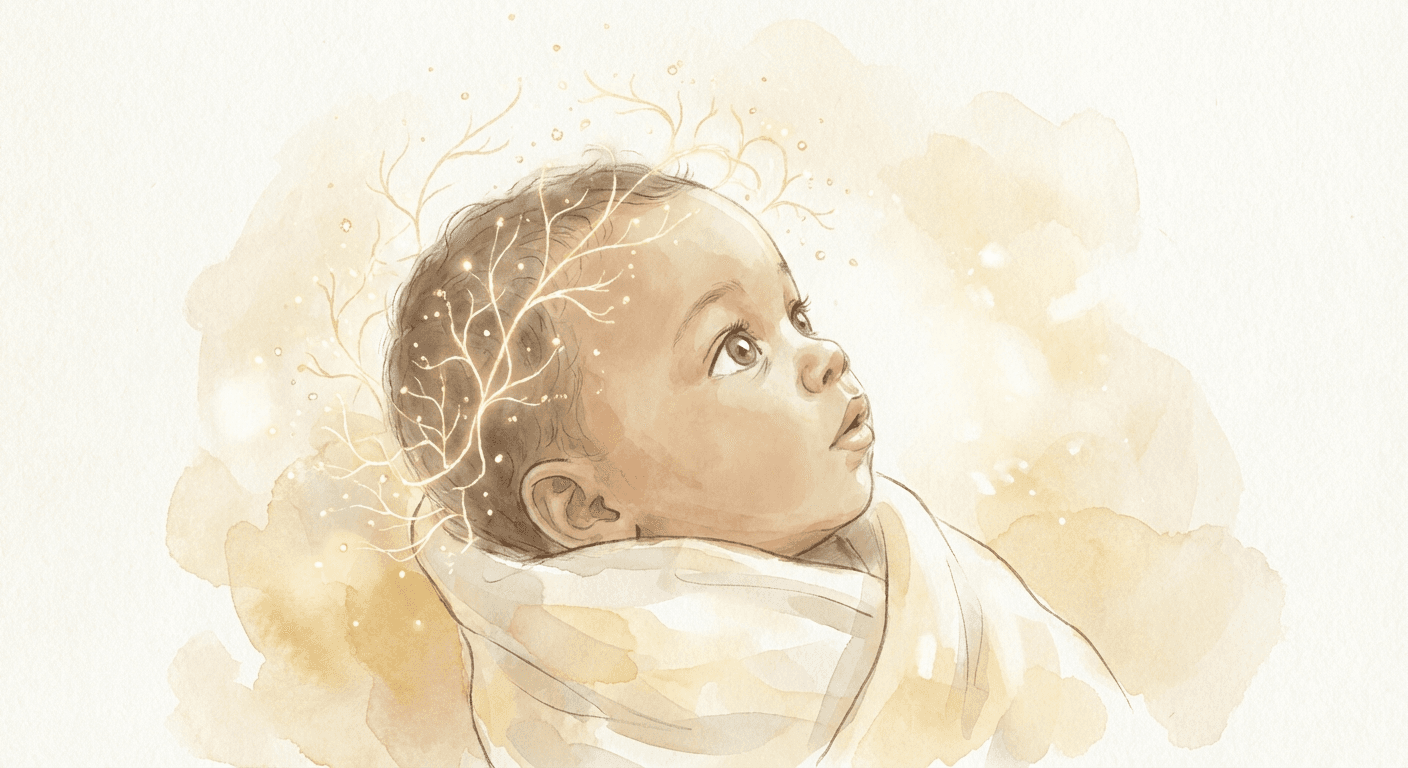
The Most Incredible Construction Project in the Universe
I still remember the moment this fact stopped me in my tracks. I was nursing my daughter at 3am, half-asleep, scrolling through a research article — and I read that her tiny brain was forming more than one million new neural connections every single second. I looked down at her and thought: you are doing the most extraordinary thing in the universe right now, and you have no idea.
To put that in perspective, that's faster than any other time in human life. By the time your child turns three, their brain will have formed roughly 1,000 trillion connections — about twice as many as you have right now as an adult.
What Are Neural Connections, Anyway?
Think of neural connections (scientists call them synapses) as tiny bridges between brain cells. Each bridge allows information to travel from one part of the brain to another. The more bridges, the more pathways for learning, feeling, moving, and understanding the world.
When your baby hears your voice, sees your smile, or feels your touch — bridges are being built. When they reach for a toy, taste something new, or hear a lullaby — more bridges. Every single experience is literally shaping the architecture of their brain.
The "Use It or Lose It" Principle
Here's where it gets really interesting. Your baby's brain actually overproduces connections on purpose. It builds way more than it needs, and then, through a process called synaptic pruning, it starts eliminating the ones that aren't being used.
Think of it like a sculptor. The brain creates a massive block of marble (all those connections), and then chisels away the parts that aren't needed. The connections that get used repeatedly become stronger and more efficient. The ones that don't? They fade away.
This is why early experiences matter so much. You are literally helping your baby's brain decide which connections to keep.
Key Takeaways
- Your baby's brain forms over 1 million neural connections per second in the first 3 years
- Every experience — every touch, sound, and interaction — physically shapes their brain
- The brain overproduces connections, then prunes the unused ones (use it or lose it)
- You don't need expensive toys or programs — responsive, loving interaction is the #1 brain builder
- Talk, sing, read, and play — these everyday moments are building your baby's brain architecture
So What Does This Mean for You?
Here's the beautiful news — and honestly, this is what made me cry happy tears when I first understood it: you don't need to do anything extraordinary. You don't need flashcards, expensive brain-training apps, or Baby Einstein videos. The most powerful brain-building tool in the world is already at your disposal.
It's you. All those moments you thought were "nothing" — the chatting during bath time, the silly voices, the hundredth reading of Goodnight Moon — those were building your baby's brain all along.
The everyday things that matter most:
Talk to your baby. Even before they understand words, your voice is building language pathways. Narrate your day: "Now we're going to change your diaper. Feel how warm the water is?" Research shows that children who hear more words in the first three years develop stronger language skills later.
Respond to their cues. When your baby babbles and you babble back, you're engaging in what scientists call "serve and return" interactions. These back-and-forth exchanges are the single most important thing you can do for brain development.
Read together. Even to a newborn. It's not about the words on the page — it's about the rhythm of your voice, the closeness of your bodies, and the shared attention to something interesting.
Let them explore. Safe, supervised exploration is brain food. Let your baby touch different textures, hear different sounds, see different colors. Every new sensory experience is building new connections.
Play. Peek-a-boo isn't just fun — it teaches object permanence. Stacking blocks teaches cause and effect. Singing songs builds memory and language. Play is literally how babies learn.
The Stress Factor
One important caveat: chronic, unmanaged stress can interfere with healthy brain development. We're not talking about the normal stresses of parenting — a crying baby, a sleepless night, a frustrating day. Those are normal and won't cause harm.
We're talking about prolonged, severe stress without adequate support — things like poverty, untreated parental depression, or an unsafe environment. If you're struggling, reaching out for help isn't just good for you — it's good for your baby's brain, too.
The Bottom Line
Your baby's brain is performing the most extraordinary feat of engineering in the known universe, and it's happening right under your nose. The best part? The most powerful brain-building activities are free, simple, and available to every parent:
- Love your baby
- Talk to your baby
- Respond to your baby
- Play with your baby
That's it. That's the secret to raising a brilliant little human.
You're already doing more than you think. Every cuddle, every silly face, every bedtime story — it all counts. And it counts more than you know.
Stay in the loop
Weekly tips backed by science, delivered with love.
You might also like
Your Baby Doesn't Need Expensive Toys to Develop Well — Here's What They Need Instead
The baby toy industry is worth billions — but research shows the best brain-building tools are free. Here's what science…
Boys' Brains vs. Girls' Brains: What Neuroscience Actually Tells Us
Are boys really "wired" for trucks and girls for dolls? The science of sex differences in baby brains is way more nuance…