How to Create a Brain-Boosting Home Environment on Any Budget
The Most Expensive Toy I Ever Bought Ended Up Being Outperformed by a Cardboard Box
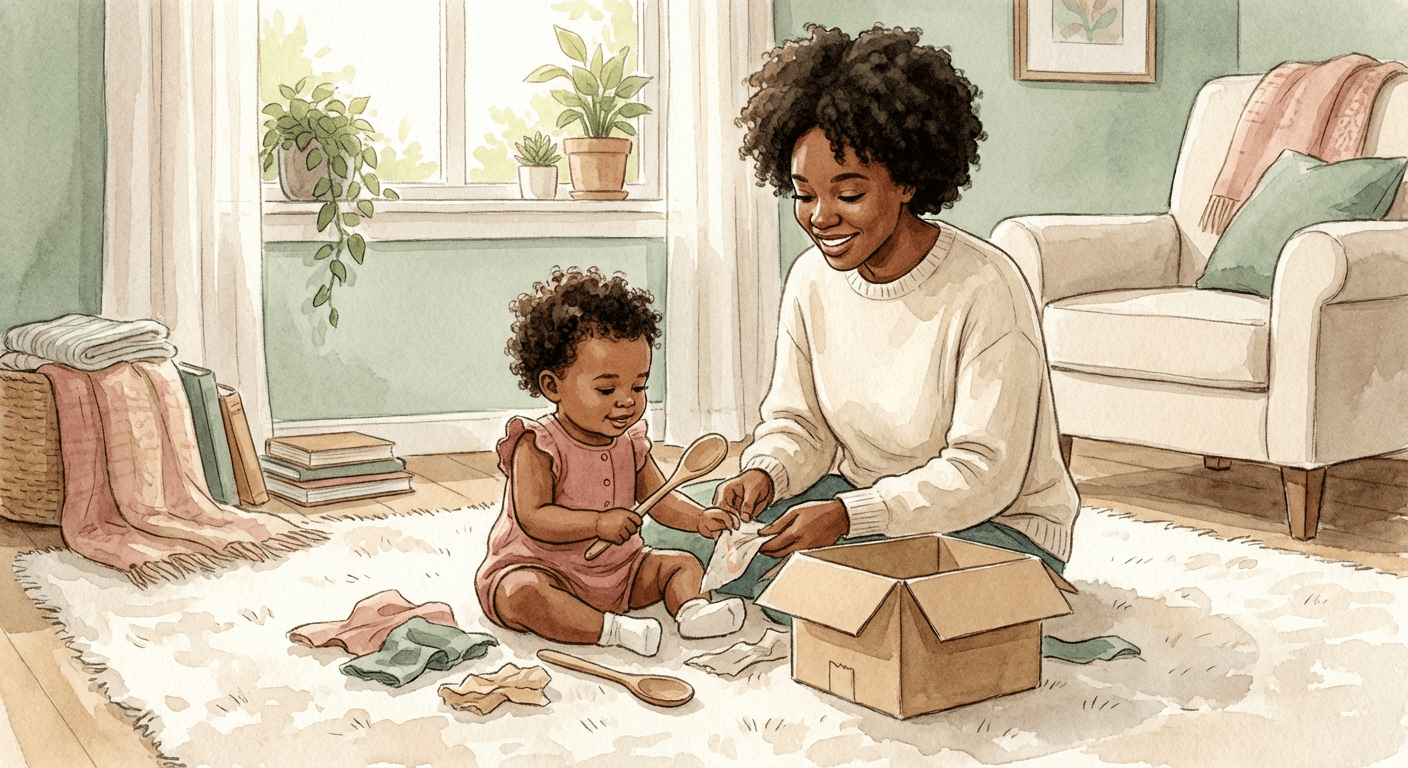
I need to tell you about the $89 developmental activity center sitting in my living room right now — the one my daughter played with for exactly four minutes before crawling over to the Amazon box it came in.
She spent the next 45 minutes putting things in the box, taking them out, climbing into it, falling over, laughing, and doing it all again. I stood there watching her, half amused, half horrified at myself, and thought: I've been overthinking this entire thing.
That was the day I started really digging into the research on what actually creates a stimulating home environment for little brains. And what I found was both humbling and incredibly freeing: the most powerful brain-building tools you already own. Most of them are free.
Let me save you the $89.
What "Brain-Boosting Environment" Actually Means (It's Not What You Think)
When you hear "enriched environment for brain development," it's easy to picture a Pinterest playroom with Montessori shelves, color-coded sensory bins, and educational toys organized by developmental stage. That's lovely if you have the budget and energy, but it's absolutely not what the science is talking about.
The Harvard Center on the Developing Child defines a supportive developmental environment through three core elements: responsive relationships, appropriate stimulation, and reduced toxic stress. Notice what's not on that list? A shopping cart full of educational products.
Here's the number that puts it all in perspective: during the first few years of life, your baby's brain forms more than one million new neural connections every single second. That's an almost incomprehensible rate of growth. And what drives which connections get strengthened and which get pruned away? Not the toys on the shelf — but the experiences, interactions, and environments your baby encounters every day.
Zero to Three puts it plainly: 90% of brain development happens before age five, with the most pivotal window being birth to three. The brain is literally being built during this period, and the building materials are interactions, not items.
The Research That Changed How I Think About "Enough"
If there's one study that should be required reading for every parent who's ever felt guilty about their baby's play setup, it's the Jamaica Home Visiting Study.
Starting in 1987, researchers worked with families in low-income neighborhoods in Kingston, Jamaica. The intervention was beautifully simple: community health workers visited homes weekly, showing mothers how to play with and talk to their babies using homemade toys and everyday objects. No fancy equipment. No expensive programs. Just guided, responsive interaction.
The results were extraordinary — and they lasted. When researchers followed up with these children at age 31, the ones who received early stimulation showed significantly higher IQ scores (an effect size of 0.57, which is substantial in developmental research), greater cognitive flexibility, higher earnings, and even better mental health outcomes. All from simple play and conversation during the first two years of life.
Let that sink in for a moment. Cardboard toys, wooden spoons, and a parent who was shown how to play responsively created measurable cognitive advantages that lasted three decades.
More recently, the "Baby's First Years" study (published in PNAS, 2022) out of Columbia University added another dimension. Researchers gave low-income mothers either $333 or $20 per month after their babies were born. At one year, babies in the higher-payment group showed measurably different brain activity on EEG — more of the high-frequency patterns associated with thinking and learning.
The takeaway wasn't that money buys smarter babies. It was that reducing financial stress freed up parents to be more present, responsive, and engaged — which is what actually builds brains. The environment matters, but the most important part of that environment is you.
The Four Free Pillars of a Brain-Boosting Home
Based on what the research consistently shows, here are the four things that matter most — and none of them cost a thing.
1. Your Voice (The Most Powerful Brain-Building Tool You Own)
If you do nothing else on this list, do this: talk to your baby. A lot.
I'm not talking about reciting flash cards or running vocabulary drills. I mean narrating your life. "We're going to the kitchen now. I'm going to open the fridge. Oh, look at this — it's a red apple! It's smooth and cold." It feels silly at first. I know. I talked to my newborn about my grocery list for weeks before it stopped feeling weird.
But here's why it matters: research on language-rich environments shows that the quantity and quality of words babies hear directly shapes their language development, vocabulary size, and cognitive abilities. Every word you speak is a tiny workout for their developing auditory cortex, language centers, and social brain.
And it's not just talking at them — it's the "serve and return" pattern that Harvard identifies as the primary driver of healthy brain architecture. Your baby coos, you respond. They point, you name the thing. They babble, you babble back. These back-and-forth exchanges build neural pathways with every volley.
Budget cost: $0. You already have everything you need.
2. A Safe Space to Explore (The "Yes Space")
One of the best things I ever did was create what some parents call a "yes space" — a small, baby-proofed area where my daughter could explore freely without me hovering and saying "no" every 30 seconds.
This doesn't require a dedicated room or expensive baby gates (though those help). It can be a corner of your living room with some cushions, a blanket on the floor, and a few interesting objects within reach. The point is to give your baby a place where they can safely follow their curiosity — touching, mouthing, reaching, rolling, crawling — without constant restriction.
Why does this matter for the brain? The AAP emphasizes that infants learn best through exploring their physical environment. When babies can move freely and manipulate objects, they're building circuits for spatial awareness, cause and effect, problem-solving, and motor planning. Every time they reach for something and grasp it, their brain is integrating visual, motor, and tactile information in real time.
A baby-proofed corner with a wooden spoon, a silicone cup, and a crinkly piece of fabric is more brain-stimulating than a $200 activity gym your baby can't interact with independently.
Budget cost: $0–$20 (outlet covers and cabinet locks if needed).
3. Reading (Anything, Starting Now)
Here's a confession: I used to feel embarrassed reading Goodnight Moon aloud in a dramatic voice to a three-week-old who was clearly more interested in my chin. But the research on early reading is unequivocal — it is one of the most impactful things you can do for your baby's brain development, and you can start from birth.
Reading aloud exposes babies to vocabulary, sentence structures, and speech patterns they wouldn't encounter in everyday conversation. Even simple picture books introduce words and concepts beyond the daily "time for a diaper change" script. And for toddlers, shared book reading builds narrative understanding, attention span, and pre-literacy skills that directly predict school readiness.
But here's the part that takes the pressure off: the specific book barely matters. Read a picture book, a magazine, the back of the cereal box. What matters is the sound of your voice, the turn-taking of pointing and naming, and the closeness of sitting together. Your local library is a goldmine of free books — and library story time adds social interaction to the mix.
Budget cost: $0 (library cards are free).
4. Singing and Music (No Talent Required)
I cannot sing. I want to be clear about that. My rendition of Twinkle Twinkle Little Star has been described by my husband as "committed but misguided." And yet, research suggests that singing to babies may be even more effective than talking for certain aspects of brain development.
Babies are wired to tune into singing — the rhythm, melody, and repetition of songs help build memory, pattern recognition, and auditory processing. Nursery rhymes are particularly powerful because they combine repetition (which strengthens neural pathways) with rhyming patterns (which build phonological awareness — the foundation of reading).
Plus, singing activates your baby's emotional brain. It regulates their mood, reduces stress hormones, and strengthens your bond. And unlike a toy that runs out of batteries, your voice is always available, always free, always exactly what they need.
Budget cost: $0. And your baby genuinely doesn't care if you're off-key.
10 Brain-Boosting Activities That Cost Almost Nothing
Now for the practical stuff. Here are ten activities backed by developmental science that you can do today with things already in your home:
1. The Narration Game — Describe everything you're doing as you do it. Cooking, folding laundry, walking to the park. Your running commentary is a language development powerhouse.
2. Cardboard Box World — Give your toddler a large box. They will put things in it, take things out, sit in it, push it, stack things on it. This is object permanence, spatial reasoning, and creative play all in one.
3. Kitchen Band — Wooden spoons + pots and pans = your baby's first music lesson. They're learning about cause and effect, rhythm, and volume control (the last one takes a while).
4. Texture Walk — Collect safe household items with different textures: a smooth spoon, a rough washcloth, a squishy sponge, a crinkly piece of paper. Let your baby explore each one while you name the textures.
5. Water Play — A shallow container of water with some cups and spoons. Pouring, splashing, and transferring water teaches volume, cause and effect, and fine motor control. (Do this one outside or in the bathtub unless you enjoy mopping.)
6. The "Where Did It Go?" Game — Hide a toy under a cloth and let your baby find it. This classic peek-a-boo variation builds object permanence — the understanding that things exist even when you can't see them, a major cognitive milestone.
7. Mirror Time — Hold your baby up to a mirror. Point to their reflection, name their features. Babies are fascinated by faces, and mirror play develops visual tracking, self-awareness, and social cognition.
8. Nature Walks — Take your baby outside and describe what you see. Trees, birds, cars, clouds. Research from the Children & Nature Network shows that outdoor environments lead to richer language use in young children, including more varied vocabulary and more excited expressions.
9. Sort and Match — Give your toddler a handful of socks to sort by color, or mix two types of dried pasta and let them separate them into bowls. Sorting is early math — it builds categorization, pattern recognition, and executive function.
10. Dance Party — Put on music and move together. Dancing builds vestibular processing, coordination, rhythm, and social bonding. It also happens to be the most fun thing on this list.
What About Screens and Educational Toys?
I know this is the question hovering in the background, so let's address it directly.
The AAP recommends avoiding screen media for children under 18 months, with the exception of video chatting. For 18-24 months, if you introduce screens, make it high-quality content that you watch together. And for 2-5 year olds, limit it to one hour per day of quality programming.
This doesn't mean screens are evil. It means they're not a substitute for the real-world interaction that actually builds brain architecture. A flashy educational app can't do what a cardboard box and a responsive parent can — it can't engage in serve-and-return, can't respond to your baby's unique signals, and can't provide the sensory richness of physical exploration.
As for expensive developmental toys — some are wonderful, and if they bring joy to your family, go for it. But no toy, at any price point, can replace the brain-building power of a present, responsive caregiver. The Jamaica study proved this three decades ago, and every subsequent study has confirmed it.
Creating Your Environment: A Room-by-Room Cheat Sheet
You don't need a dedicated playroom. Here's how to turn what you already have into a brain-boosting space:
Living Room: Clear a small corner as your baby's "yes space." Add a blanket, a few safe household objects, and rotate them weekly. A basket of board books within reach.
Kitchen: (Supervised) Give your baby a wooden spoon and a pot while you cook. Narrate what you're doing. Let toddlers help wash vegetables — sensory play meets real-world participation.
Bathroom: Bath time is sensory time. Cups for pouring, washcloths for squeezing, bubbles for visual tracking. Name body parts while you wash them.
Outdoors: Even a small balcony or front step counts. Point at birds, feel the breeze, touch the leaves. The novelty of the outdoor world is endlessly stimulating.
Bedroom: Bedtime reading routine. Even one book before sleep builds the habit and creates a powerful bonding ritual.
Key Takeaways
- **The most powerful brain-building tools are free:** your voice, your responsiveness, and everyday household items
- Your baby's brain forms **more than one million new neural connections per second** in the first years — shaped by experiences, not products
- The **Jamaica Home Visiting Study** showed that simple play with homemade toys led to IQ gains still measurable at age 31
- **"Serve and return" interactions** — the back-and-forth of babbling, responding, and engaging — are what Harvard identifies as the primary driver of healthy brain architecture
- **Talk, read, sing, and play** with household objects. A cardboard box, a wooden spoon, and your attention are more stimulating than any expensive toy
- The **AAP recommends avoiding screens under 18 months** — real-world interaction and exploration are what build brains at this age
You're Already Building Their Brain — Right Now, Reading This
Here's what I want you to take away from all of this: if you're talking to your baby, responding to their cues, and letting them explore their world — you're already doing it. You're already creating a brain-boosting environment.
You don't need the matching wooden toy set. You don't need the subscription box. You don't need the sensory wall you saw on Instagram. Those things are fine, but they're extras. The foundation is you — your voice, your presence, your willingness to get down on the floor and narrate the world.
The researchers in Jamaica proved it with wooden spoons and homemade toys. The science confirms it over and over: responsive, engaged parenting is the single most powerful force in early brain development. And it doesn't cost a thing.
So the next time you find yourself narrating a trip to the grocery store to a baby who's mainly interested in eating their own sock, remember: you're not being silly. You're building a brain. One word, one interaction, one cardboard box at a time.
Stay in the loop
Weekly tips backed by science, delivered with love.
You might also like
Your Baby Doesn't Need Expensive Toys to Develop Well — Here's What They Need Instead
The baby toy industry is worth billions — but research shows the best brain-building tools are free. Here's what science…
Boys' Brains vs. Girls' Brains: What Neuroscience Actually Tells Us
Are boys really "wired" for trucks and girls for dolls? The science of sex differences in baby brains is way more nuance…