How Stress Affects Your Baby's Developing Brain (And What You Can Do)
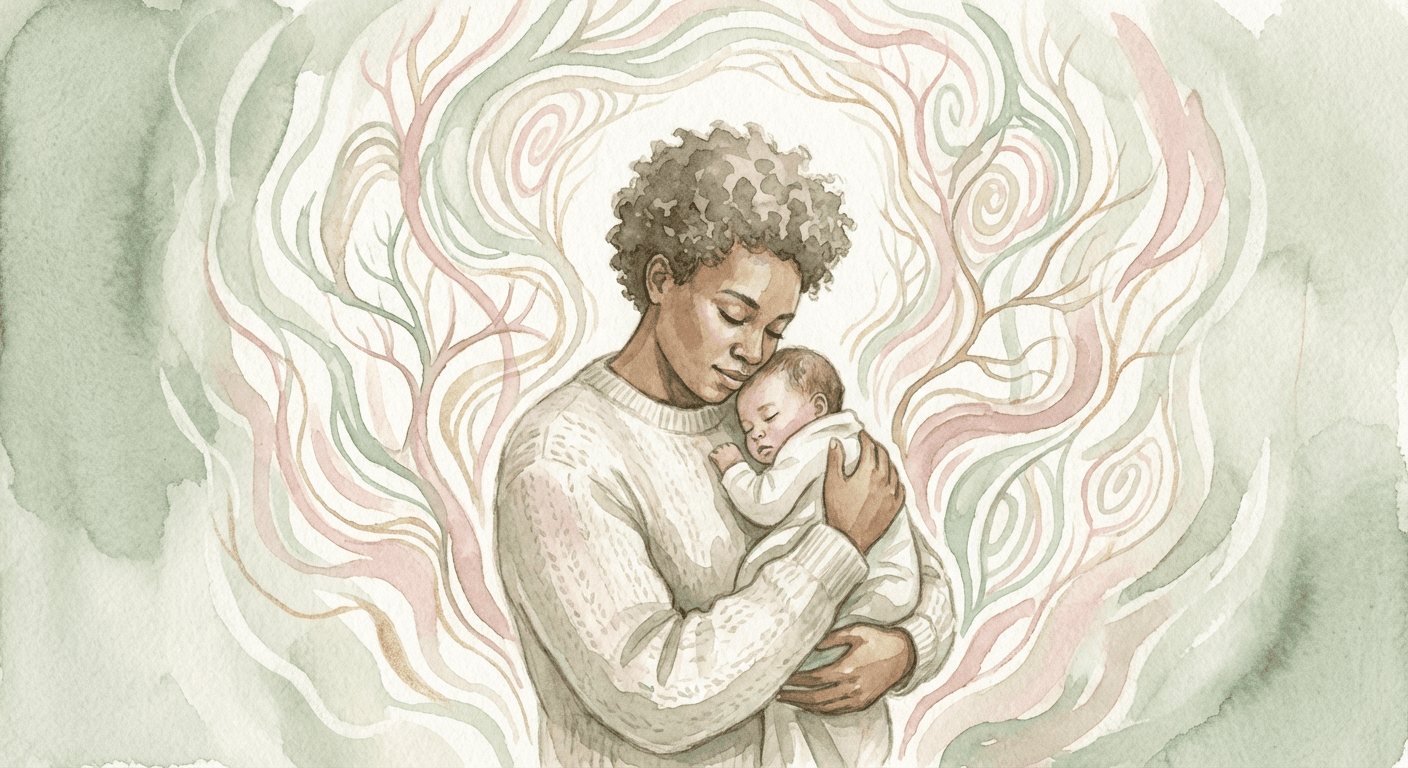
The Night I Went Down the Cortisol Rabbit Hole
It was 11 PM, my baby was finally asleep after a rough day, and I made the classic new-parent mistake: I Googled "can stress hurt my baby's brain."
Forty-five minutes later, I was deep in research papers, completely stressed out about... stress. The irony was not lost on me.
Here's what I wish someone had told me that night: yes, stress can affect your baby's developing brain — but not in the way you probably think. The occasional bad day, the crying you can't immediately fix, even the argument you had in front of your baby that one time? That's not what the research is about.
The science is actually really reassuring once you understand the full picture. So let's break it down — what stress actually does to tiny developing brains, what kind of stress matters, and (spoiler alert) why you are already your baby's most powerful brain-protecting tool.
Not All Stress Is Created Equal
This is the most important thing I learned, and it completely changed how I thought about stress and my baby: scientists categorize stress into three types, and only one of them is genuinely harmful to brain development.
The Harvard Center on the Developing Child identifies three categories:
Positive Stress Brief, mild stress that's a normal part of life. Think: the first day with a new babysitter, getting a vaccination, or being startled by a loud noise. Your baby's heart rate goes up, stress hormones tick upward slightly, then everything settles back down. **This kind of stress is actually good** — it's like a fire drill for the brain's stress response system, helping it learn to activate and then calm down appropriately.
Tolerable Stress More intense, but still time-limited. A family move. A parent's illness. The loss of a loved one. These events activate the stress response more strongly, but here's the key: **if a caring, responsive adult is there to help the child through it,** the brain can recover. The stress response ramps up and then comes back down, and the child's developing brain architecture stays on track.
Toxic Stress This is the one that can genuinely disrupt brain development. Toxic stress happens when a child experiences **strong, frequent, or prolonged adversity** — things like ongoing abuse, chronic neglect, severe household dysfunction, or persistent poverty — **without the buffer of a supportive adult relationship.**
That last part is everything: the presence or absence of a supportive adult relationship is what determines whether serious stress becomes tolerable or toxic.
What Happens Inside a Stressed Baby's Brain
When your baby experiences something stressful, their body activates the stress response system — an incredible survival mechanism. The brain signals the release of stress hormones — primarily cortisol and adrenaline — which increase heart rate, sharpen attention, and prepare the body to respond.
In small, temporary doses, this system works beautifully. It activates, does its job, and switches off. No harm done.
But when the stress response is activated intensely, frequently, and for long periods without a caring adult to help bring it back down, those stress hormones — especially cortisol — stay elevated. And that's where the problems start.
The brain areas most affected
Research consistently points to three regions that are especially vulnerable to prolonged cortisol exposure:
- The amygdala — your baby's emotional alarm system. Chronic stress can cause it to become overreactive, essentially keeping the brain on high alert even when there's no threat. A 2020 study from the University of Edinburgh found that elevated cortisol during pregnancy was associated with structural changes in the newborn's amygdala, potentially making the child more prone to emotional difficulties.
- The hippocampus — critical for learning and memory. Prolonged cortisol exposure can impair its development, which is particularly concerning in the first three years when the hippocampus is undergoing rapid growth.
- The prefrontal cortex — the brain's CEO, responsible for decision-making, attention, and impulse control. This region develops slowly (it's not fully mature until the mid-20s!), and research has linked maternal stress to smaller prefrontal cortex volumes in infants — though this relationship was moderated by social support and resilience.
The bottom line: a brain bathed in constant cortisol builds different architecture than a brain that feels safe. Neural connections that should be forming for learning, language, and emotional regulation get disrupted, while the brain's threat-detection systems get overbuilt.
The Numbers That Put It in Perspective
Before this starts to feel overwhelming, let's look at what we're actually talking about:
More than 1 in 4 young children in the United States have been exposed to at least one Adverse Childhood Experience (ACE). The most common? Family economic difficulty and parental separation or divorce.
But here's the critical context: experiencing an adverse event is not the same as experiencing toxic stress. A child can go through something incredibly difficult and their brain development can stay on track, as long as they have consistent, responsive caregiving to buffer the experience.
The AAP's updated policy statement puts it perfectly: safe, stable, and nurturing relationships are "potent antidotes" for childhood adversity. Not just nice to have. Potent antidotes.
Why You Are Your Baby's Best Brain Protection
Here's where the science gets genuinely beautiful — and where I want every worried parent to pay attention.
The single most powerful factor in protecting a baby's brain from the effects of stress isn't a supplement. It's not an app. It's not an expensive program.
It's you. A responsive, caring relationship.
When you pick up your crying baby, when you make eye contact and coo back at their babbles, when you hold them close during a scary moment — you are literally regulating their stress response system. Your calm presence sends signals to their brain that say: "You're safe. The alarm can turn off now."
Researchers call this co-regulation. Your baby can't regulate their own stress response yet — that skill develops gradually over the first few years of life. In the meantime, you are their external regulator. Your steady heartbeat when you hold them, your soothing voice, your responsive presence — these aren't just comforting. They're biochemically lowering cortisol levels in your baby's brain.
A study highlighted by Zero to Three found that for infants exposed to high levels of prenatal stress, sensitive caregiving during infancy and toddlerhood significantly mitigated the negative impacts on cognitive development. The caregiving relationship literally rewrote the trajectory.
And those "serve-and-return" interactions Harvard talks about so much? They're not just brain builders — they're stress buffers. When your baby "serves" with a coo or a cry and you "return" with a response, you're actively helping their stress response system learn to activate appropriately and then calm back down. Without these interactions, the stress response can become chronically activated.
The Myth That Needs to Die: "You'll Spoil Them"
I can't write about stress and baby brains without addressing this one, because it directly undermines the most brain-protective thing parents can do.
You cannot spoil a baby by responding to them. Full stop.
Every time someone tells a new parent "let them cry, you'll spoil them," they're giving advice that directly contradicts decades of neuroscience. Responding to your baby's distress doesn't create dependence — it builds the neural architecture for independence.
The AAP, Zero to Three, and the Harvard Center on the Developing Child all agree: responsive caregiving is the foundation of healthy brain development. It's not indulgent. It's not weakness. It's literally the most important thing you can do for your child's brain.
I had moments where I wondered if I was "creating a bad habit" by always going to my baby. Learning the neuroscience behind responsive caregiving gave me permission to trust my instincts.
What You Can Actually Do (Practical, Evidence-Based Tips)
Ready for the good news? Protecting your baby's brain from toxic stress doesn't require perfection. It requires good enough, most of the time. Here's what the research says matters most:
1. Respond to their cues — consistently, not perfectly You don't need to catch every cry instantly. What matters is that your baby learns, over time, that when they signal a need, someone shows up. **Consistency builds trust, and trust builds brain architecture.** Miss a cue sometimes? That's fine. Repair is part of the process.
2. Be their calm in the storm When your baby is upset, your job isn't to fix the feeling — it's to be a steady presence while they feel it. **Hold them, speak softly, breathe slowly.** Your regulated nervous system helps regulate theirs. This is co-regulation in action.
3. Practice serve-and-return interactions When your baby coos, coo back. When they point, look and narrate. When they make a face, mirror it. **These tiny back-and-forth moments are among the most powerful brain-building activities that exist.** They also train the stress response system to function well.
4. Create predictable routines Babies and toddlers thrive on predictability. It doesn't need to be rigid — just **generally consistent.** Wake up, eat, play, nap, repeat. Predictability tells the developing brain: "The world is safe and makes sense." This keeps baseline stress hormones low.
5. Take care of yourself — seriously This isn't a platitude. **Parental stress directly affects babies** through changes in interaction quality, emotional availability, and even cortisol transfer through close contact. Taking care of your mental health isn't selfish — it's a direct investment in your baby's brain. Ask for help. Take breaks. Talk to someone if you're struggling.
6. Build your support network Remember: what turns adversity into toxic stress is the absence of buffering relationships. **You don't have to be the only buffer.** Partners, grandparents, friends, caregivers — every responsive adult in your baby's life adds another layer of protection.
7. Don't catastrophize normal stress Your baby crying in the car seat isn't toxic stress. A bad day at daycare isn't toxic stress. You losing your temper once isn't toxic stress. **Normal, everyday stressors — especially ones that are brief and buffered by your presence — are part of healthy development.** They help the stress response system learn to function properly.
Key Takeaways
- There are three types of stress: positive (normal and healthy), tolerable (intense but buffered by supportive adults), and toxic (prolonged, without support) — only toxic stress harms brain development
- Chronic cortisol exposure can affect the amygdala, hippocampus, and prefrontal cortex — disrupting emotional regulation, memory, and learning
- The single most powerful buffer against toxic stress is a responsive, caring relationship with an adult — that's you
- Co-regulation (your calm helping regulate their stress) is how babies learn to manage their own emotions over time
- You cannot spoil a baby by responding to them — responsiveness builds the neural architecture for resilience and independence
- Normal everyday stress is not toxic stress — occasional tough moments are a healthy part of brain development
You're Already Doing the Most Important Thing
If you've read this far, I'm guessing you're the kind of parent who worries about doing right by their child. And if that's the case, I want you to hear this:
The fact that you care is itself protective.
A parent who worries about doing right by their child is a parent who is showing up. And showing up, consistently and responsively, is the single most important thing the science says you can do.
Your baby's brain is remarkably resilient. It's designed to develop in the context of relationships — messy, imperfect, human relationships. You don't need to be a perfect parent. You don't need to eliminate all stress from your child's life (and honestly, you shouldn't — they need some positive stress to build resilience).
What you need to do is keep showing up. Keep responding. Keep being their safe place.
Because every time you do, you're not just comforting your baby. You're literally building their brain.
And if you're having a rough day and need to hear it: you're doing a great job. The science says so.
Stay in the loop
Weekly tips backed by science, delivered with love.
You might also like
Your Baby Doesn't Need Expensive Toys to Develop Well — Here's What They Need Instead
The baby toy industry is worth billions — but research shows the best brain-building tools are free. Here's what science…
Boys' Brains vs. Girls' Brains: What Neuroscience Actually Tells Us
Are boys really "wired" for trucks and girls for dolls? The science of sex differences in baby brains is way more nuance…